
海外党选回国加速器:雷神手游和飞驰哪个好?附Quickback/星河实测+归雁知乎评价
Living overseas as a Chinese student or expat, nothing stings more than hitting a "region not supported" wall when trying to watch your favorite domestic drama, or lagging out mid-Genshin Impact co-op with friends back home. Lately, I’ve gotten tons of DMs asking: "雷神手游和飞驰哪个好?" for seamless access to Chinese apps and websites. The root cause? Geographical IP restrictions—most domestic platforms block overseas IPs to comply with content licensing rules. In this guide, I’ll break down the pros and cons of雷神 and飞驰, answer whether Quickback和星河好用吗, share insights from归雁加速器知乎 reviews, and introduce a hidden gem that solves all these pain points.
What to Look for in a Reliable 回国 Accelerator
Before diving into comparisons, let’s talk about what makes a good accelerator for overseas users. First, global node coverage—you need nodes close to your location to minimize latency. Second, multi-platform support (phone, laptop, tablet) since we switch devices constantly. Third, unlimited data—no one wants to cut a drama short because of a data cap. Fourth, dedicated lines for specific content (games vs. streaming) to avoid congestion. Fifth, security—your data shouldn’t be at risk. Sixth, responsive customer service—because technical issues don’t wait for business hours.
雷神手游和飞驰哪个好?A Side-by-Side Test
I spent two weeks testing both雷神 and飞驰 to see which works better for overseas users. Let’s start with雷神: as the name suggests, it’s game-focused. I used it to play Honor of Kings and Genshin Impact. For Kings, the latency was around 80ms during off-peak hours, which is decent. But during peak times (8-10 PM Beijing), it jumped to 150ms—enough to make me miss critical skill shots. Streaming? Forget it. I tried watching iQiyi, and the video buffered every 2 minutes. The app interface is clunky too, with too many ads.
Now,飞驰. It claims to support both games and streaming. I tested it with Bilibili and PUBG Mobile. Bilibili streams were smooth at 1080p, but PUBG latency was inconsistent—sometimes 90ms, sometimes 200ms. The biggest issue? Data caps. The free plan only gives 5GB/month, and the paid plan is pricey. Also, I noticed that it doesn’t support MacOS, which is a bummer for Apple users like me.
So,雷神手游和飞驰哪个好?If you’re a casual mobile gamer who doesn’t care about streaming,雷神 might work. But if you need a all-in-one solution, neither hits the mark.
Quickback和星河好用吗?Real User Experiences
Next, I checked Quickback and星河, two other popular options. Quickback: I heard it’s fast for browsing. I tried accessing WeChat Moments and Taobao—load times were under 2 seconds, which is great. But when I tried to watch a live stream on Douyin, it lagged badly. The node selection is limited too; if you’re in a small country like New Zealand, you might only have one node to choose from.
星河: It has dedicated lines for Tencent Video and Youku. I tested Tencent Video’s 4K content—no buffering at all. But the game support is weak. I tried playing Honkai: Star Rail, and the latency was over 200ms. Also, some users report random disconnections, which is frustrating when you’re in the middle of a show.
So, Quickback和星河好用吗?Quickback is good for browsing,星河 for streaming—but neither is perfect for both.
归雁加速器知乎:What Do Users Say?
I scrolled through归雁加速器知乎 reviews to see what real users think. The feedback is mixed. Some users love the 24/7 customer service—one user said they got a response within 10 minutes when their connection dropped. Others complain about the price: the annual plan is 30% more expensive than similar options. A few users mentioned that the connection isn’t as stable as advertised, especially during peak hours. Overall,归雁 is decent but not the best value.
Why 番茄 Accelerator Stands Out for Overseas Chinese
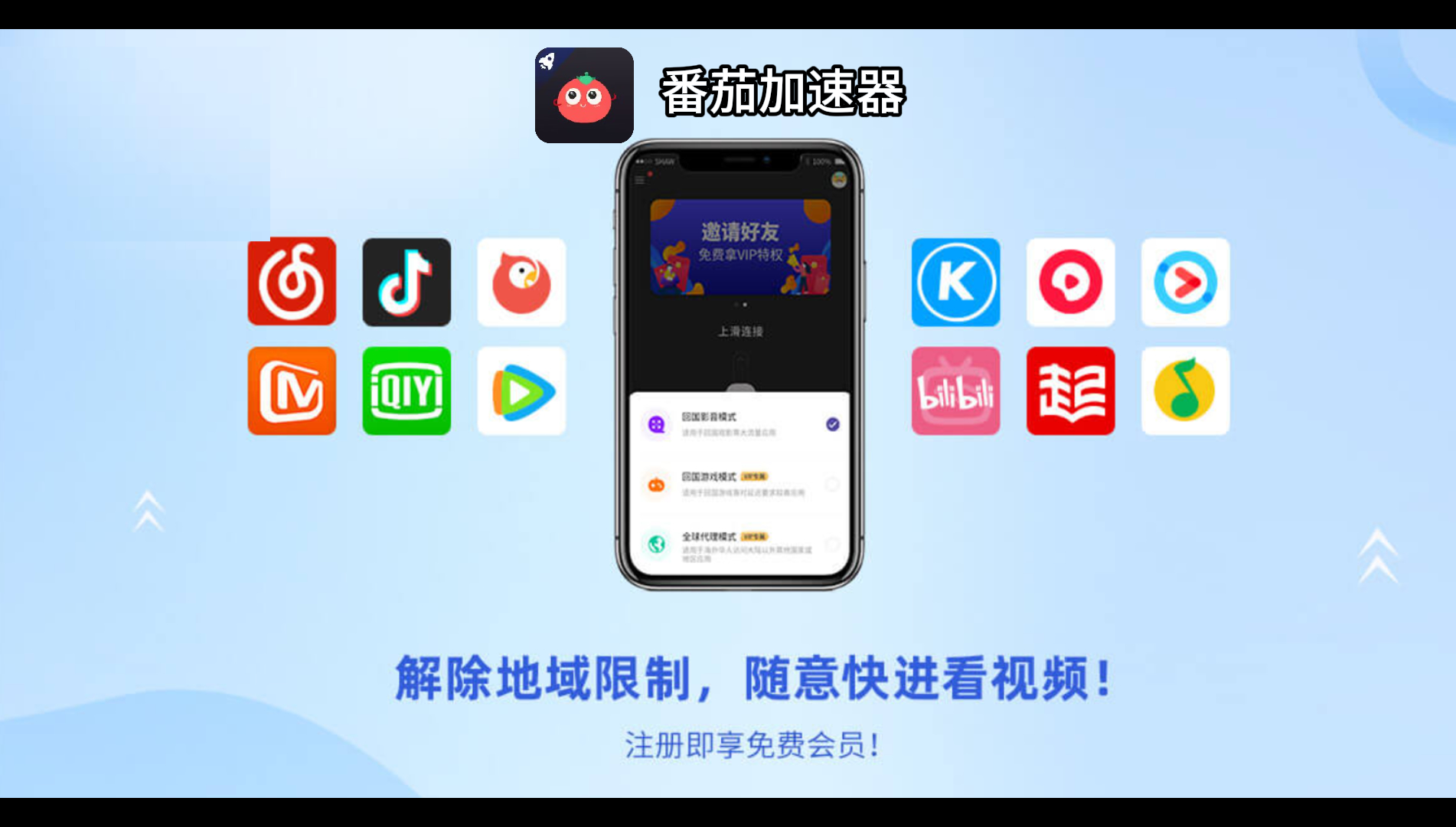
After testing all these, I found番茄 Accelerator to be the most reliable. Here’s why it checks all the boxes:
First, global node distribution. It has nodes in over 30 countries, from the US to Australia. The smart algorithm automatically recommends the optimal line—no more manual switching. I’m in Canada, and the node it picked gave me 50ms latency for Genshin Impact.
Second, multi-platform support. It works on Android, iOS, Windows, and Mac. Even better, you can use it on up to 5 devices at the same time—perfect for me since I use my phone, laptop, and tablet all day.
Third, stable unlimited流量. No data caps, ever. The smart分流 feature ensures that only domestic traffic is accelerated, so my regular internet (like Netflix or Google) isn’t affected. They also have dedicated lines for video and games—100M独享 bandwidth for popular platforms like Bilibili and games like Honkai. I’ve been using it for a month, and I haven’t had a single buffering issue.
Fourth, data security. All data is encrypted with AES-256, and they use专线传输. I don’t have to worry about my personal information being leaked.
Fifth, after-sales support. Their technical team is available 24/7. Once, I had a problem connecting to a specific app, and they fixed it within 15 minutes. That’s the kind of service you need when you’re overseas.
Final Thoughts: Which Accelerator Should You Choose?
Going back to the original question:雷神手游和飞驰哪个好?If you’re a game-only user,雷神 might suffice, but it’s not ideal for streaming.飞驰 has broader coverage but lacks stability and Mac support. Quickback and星河 have niche strengths but fall short of being all-in-one.归雁 has good service but is pricey.

For most overseas users—students, expats, or anyone who wants to access domestic content seamlessly—番茄 Accelerator is the best choice. It’s fast, stable, multi-platform, secure, and affordable. Give it a try, and you’ll be able to watch your favorite shows, play games with friends, and browse domestic websites without any hassle. Say goodbye to region locks and lag—番茄 has you covered.